Road Trips With Kids: How to Survive Long Journeys With Children
I’ve driven across three states with a screaming toddler in the back seat, and I’ve also had a nine hour stretch where both my kids slept, snacked, and played quietly like some kind of parenting miracle happened. The difference between those two trips wasn’t luck. It was preparation, timing, and a handful of tricks I wish someone had told me before my first family road trip.
Long car journeys with kids test everyone’s patience, but they don’t have to be a disaster. With the right planning, you can turn hours of driving into something that feels manageable, sometimes even fun. Here’s what actually works.
Plan the Route Around Your Kids, Not the GPS
Google Maps optimizes for speed. Your family needs a route optimized for sanity. The fastest way from point A to point B often skips exactly the kind of stops that save a road trip.
Before you leave, map out rest stops, parks, and fast food spots with play areas every 90 minutes to two hours. Kids under six especially need frequent breaks to move their bodies. A rigid schedule that prioritizes arrival time over comfort stops sets you up for meltdowns.
Time Your Departure Strategically
Driving during nap time or overnight works wonders for younger kids. I’ve left home at 5 a.m. with my toddler still half asleep in her pajamas, and she stayed calm for the first four hours simply because her body thought it was still bedtime.
For older kids who no longer nap, early morning departures still help. Less traffic, cooler temperatures at rest stops, and a fresher start for everyone beats fighting rush hour with cranky kids at 3 p.m.
Pack Smart: The Difference Between Chaos and Calm
What you bring in the car matters as much as where you’re driving. I’ve learned this through trial and error, mostly error.
Essentials for the road trip bag:
- Snacks that don’t melt, crumble everywhere, or stain the upholstery (think pretzels, apple slices, cheese sticks over chocolate or juice boxes)
- A refillable water bottle per kid with a straw lid to avoid spills
- Wet wipes and paper towels, more than you think you need
- A small trash bag clipped to the seat
- Backup clothes in a bag within reach, not buried in the trunk
- Motion sickness remedies if your kid is prone to it
- A basic first aid kit with kid-friendly pain relief and bandages
Pack snacks in small individual containers rather than one big bag. Kids fight over sharing, and portioning things out ahead of time cuts down on backseat squabbles before they start.
The Entertainment Arsenal
Screens get a bad reputation, but on a ten hour drive, a tablet loaded with downloaded shows is a lifesaver. I don’t feel guilty about it, and you shouldn’t either. The trick is rationing screen time so it lasts the whole trip instead of burning out in the first hour.
Mix screens with analog activities. Sticker books, magnetic drawing pads, and simple card games keep hands busy without draining a battery. Audiobooks work surprisingly well for kids as young as four, especially ones with sound effects and short chapters.
Keep Everyone Fed and Hydrated (Without the Mess)
Hunger turns even the most easygoing kid into a tiny tyrant. Low blood sugar and boredom feed off each other in a car, so staying ahead of hunger matters more than most parents realize.
| Age Group | Snack Ideas | Feeding Frequency |
|---|---|---|
| 1 to 3 years | Puffs, banana slices, yogurt pouches | Every 1 to 1.5 hours |
| 4 to 7 years | Crackers, string cheese, grapes cut in half | Every 2 hours |
| 8 to 12 years | Trail mix, granola bars, jerky | Every 2 to 3 hours |
| Teens | Whatever keeps them out of your snack stash | As needed |
Hydration matters just as much as food, but too much liquid means too many bathroom stops. Find the balance by offering small amounts often rather than a giant water bottle all at once.
Manage the “Are We There Yet” Problem
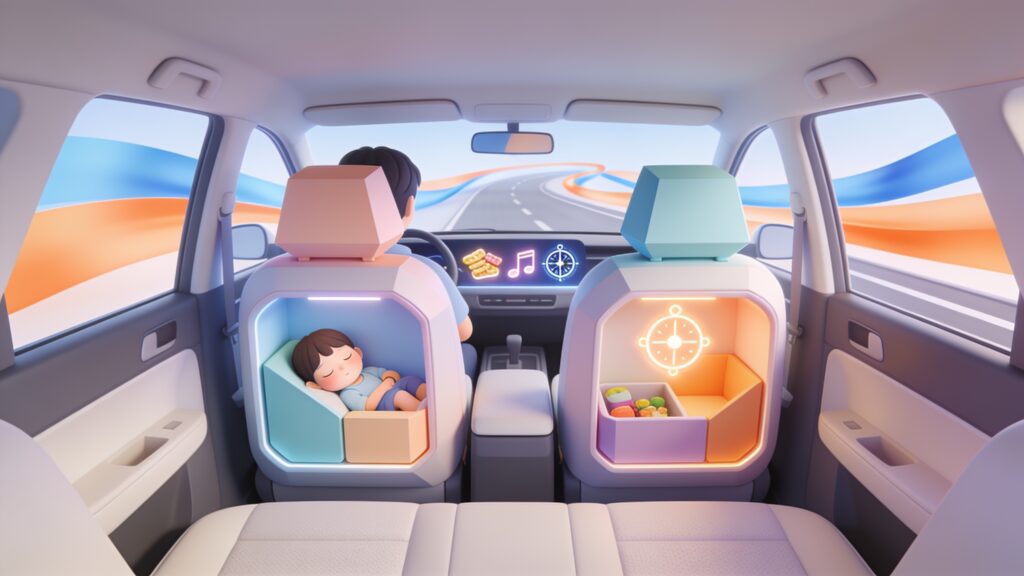
Kids have no real concept of time or distance, which makes long drives feel infinite to them. Instead of answering “are we there yet” with a number of hours, try relating it to something they understand.
I tell my kids we’ll be there after two movies or three snack breaks. That framing makes the wait feel concrete instead of abstract. A countdown chart with removable stickers for each hour also works well for kids who like visual progress.
Games That Actually Work in a Car
Not every road trip game holds a kid’s attention for more than five minutes. These ones consistently do:
- The license plate game, spotting plates from different states
- Twenty questions with a category limit (animals, foods, movies)
- The alphabet game, finding letters in order on road signs
- “I spy” with color-based clues instead of shape-based ones for younger kids
- Storytelling chains where each person adds one sentence
These games cost nothing, need no equipment, and pull kids out of screen time without a fight.
Handling Meltdowns on the Road
Meltdowns happen no matter how well you plan. When one hits, pulling over beats pushing through. A five minute break to let a kid cry it out, stretch, or get fresh air resets the whole car faster than trying to power through while everyone’s nerves fray.
Stay calm even when you want to yell over the noise. Kids pick up on parental stress fast, and a tense driver escalates a bad moment into a worse one. I keep a “calm down” playlist of familiar, quiet songs for exactly these moments, and it helps more than I expected.
Overnight Stops: When to Break Up the Drive
Anything over eight hours in a single day with young kids gets brutal fast. Splitting a long trip across two days with an overnight stop at a hotel with a pool changes the entire experience.
Kids get to swim, burn energy, sleep in a real bed, and start the next leg refreshed. Yes, it costs more and takes more time. It’s worth it if it means arriving with a family that still likes each other.
Key Takeaways
Long drives with kids go smoother when you plan around their needs instead of forcing them into an adult’s idea of efficient travel. Frequent stops, smart snack timing, a mix of screens and hands-on activities, and realistic expectations about meltdowns all make the difference between a trip everyone survives and one everyone actually enjoys.
Start your next road trip by mapping out stops before you map out miles. Pack the snacks in individual portions, load up a few new games or shows your kids haven’t seen yet, and build in an overnight stop if the drive runs long. Your future self, sitting in a quiet car somewhere on the highway, will thank you for it.