7 Best Road Trip Activities for Toddlers and Young Kids
Anyone who has driven three hours with a screaming three-year-old in the back seat knows the truth. A road trip lives or dies on how well you keep small kids occupied. Snacks buy you fifteen minutes. A good playlist buys you twenty. After that, you need actual strategy.
I’ve logged thousands of miles with kids in the back seat, and I’ve learned that the difference between a smooth trip and a miserable one comes down to preparation. The right activities do more than fill time. They keep meltdowns at bay, make the miles pass faster, and turn the drive itself into part of the fun. Here are the seven activities that have earned a permanent spot in my road trip routine.
1. Busy Bags Packed for the Car
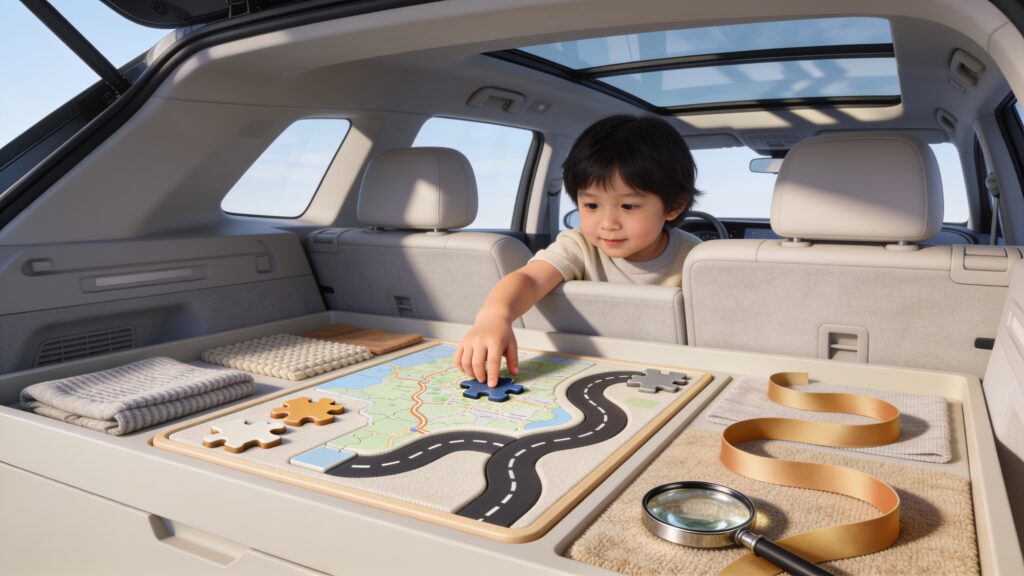
A busy bag is a small pouch or box filled with quiet, low-mess activities that live in the back seat and nowhere else. Think sticker books, magnetic tile sets, small puzzles, and mini coloring pads with a few crayons. The trick is rotation. Swap the contents every hour or two so the bag feels new again, even though you’re using the same five items on repeat.
Keep the bag stocked with things that survive being dropped, shaken, and sat on. Skip anything with tiny loose pieces that vanish into seat cracks forever. I’ve lost more puzzle pieces to minivan seat tracks than I care to admit.
2. Audio Stories and Kid-Friendly Podcasts
Screens work, but audio works almost as well and spares everyone the eye strain and the fights over volume. Kids as young as two can follow along with simple story podcasts, and by age four or five, many kids get hooked on serialized audio adventures the same way adults get hooked on true crime shows.
A few formats that hold attention well:
- Read-aloud story podcasts with sound effects and music
- Audiobooks of picture books they already know by heart
- Simple sing-along tracks with call-and-response songs
- Guided “I spy” or nature-themed audio games made for car rides
The bonus here is that audio keeps kids looking out the window instead of down at a screen, which helps with motion sickness on winding roads.
3. Window-Based Spotting Games
Spotting games take zero setup and scale to whatever age range you’re driving with. The classic is a color hunt: pick a color, and everyone calls out when they see something that matches it outside the window. For toddlers, keep it simple with big, obvious things like red trucks or yellow signs.
For kids around four to seven, turn it into a proper checklist game. Give each kid a simple card with pictures of a cow, a gas station, a motorcycle, and a water tower, and have them cross items off as they spot them. It’s basically bingo without the board, and it keeps eyes on the passing scenery instead of on a screen.
4. Snack Stations With Built-In Pacing
Food is entertainment on a road trip, whether we like it or not. The move is to portion snacks into small containers so opening a new one becomes its own mini event. A single big bag of crackers gets destroyed in ten minutes. Six small containers of crackers can stretch across two hours.
| Snack Type | Why It Works | Mess Level |
|---|---|---|
| Cut grapes or berries | Sweet, hydrating, easy to portion | Low |
| Cheese cubes or string cheese | Filling, slow to eat | Low |
| Puffed cereal or crackers | Good for tiny hands, self-feeding | Medium |
| Squeeze pouches | No spoon needed, good for toddlers | Low to medium |
| Dry cereal mix | Keeps kids occupied picking pieces out | Low |
Avoid anything sticky or heavily colored dye based snacks unless you enjoy scrubbing seat fabric at rest stops. I learned that lesson with a bag of neon gummy worms I will never buy again.
5. Interactive Sticker and Reusable Activity Books
Reusable sticker books and wipe-clean activity pads are some of the best money you’ll spend before a long drive. Kids can build scenes, peel and re-stick shapes, or trace letters with a dry erase marker, then wipe it clean and start over. For toddlers, felt boards with peel-off shapes work the same magic without any wet marker risk.
The reason these outperform regular coloring books on a long drive comes down to durability. A page of stickers or a wipe-clean mat survives dropped markers and sudden stops far better than loose crayons and paper that end up on the floor within the first hour.
6. Music and Movement Breaks at Every Stop
Toddlers and young kids are not built to sit still for four hours straight, and pretending otherwise leads to trouble. Plan a stop every ninety minutes to two hours, and treat that stop as a mandatory movement break, not just a bathroom run.
A few ways to burn energy fast during a short stop:
- A quick game of tag around the car or a rest area patch of grass
- Jumping jacks or “follow the leader” for sixty seconds
- A short walk around the parking lot while pointing out anything interesting
- Blowing bubbles if you keep a small bottle in the glove box
Ten minutes of real movement resets a toddler’s patience far better than another fifteen minutes of driving while hoping they calm down on their own.
7. Simple Verbal Games That Need No Supplies
When the busy bag is empty and the audio story has ended, verbal games save the day. These need no props, work in the dark, and scale easily by age.
For toddlers, animal sound guessing games and simple “would you rather” questions work well. For kids five and up, try twenty questions, story building where each person adds one sentence, or a simple version of the alphabet game where you name something out the window starting with each letter in order.
These games also double as a way to keep an older sibling engaged with a toddler, which frees up a few minutes of peace for whoever is in the front seat.
Building Your Own Road Trip Rotation
No single activity survives four hours of driving. The families who handle long car rides well are the ones who rotate through several short activities instead of leaning on one big one. Aim for fifteen to twenty minute blocks, and switch things up before boredom sets in rather than after.
Pack a mix of quiet activities, audio content, snacks, and movement breaks, and treat your stops as seriously as your entertainment plan. Kids under six do not run on adult logic. They run on novelty, movement, and food, delivered in short, frequent bursts.
Start building your busy bag a few days before you leave, test the audio content ahead of time, and map your rest stops before you hit the road. A little planning turns a dreaded car ride into something your kids might actually ask to repeat.