Road Trip With a Baby Under One: Survival Guide
I drove from Denver to the Oregon coast with my daughter when she was seven months old, and I spent the first two hours convinced I’d made a terrible mistake. By hour four, she was asleep, I had a rhythm going, and I realized the whole trip was manageable once I stopped treating it like a military operation. A road trip with an infant runs on preparation and low expectations for mileage, not on gear you buy in a panic at Target the night before.
This guide covers what actually matters: timing, packing, feeding, sleep, and the moments when everything falls apart in a rest stop parking lot. I’ve made most of the mistakes so you don’t have to.
Picking the Right Time to Go
Babies under one have unpredictable schedules, but certain windows make travel easier. The four to six month range often works well because many babies aren’t yet mobile, feeding is more predictable, and they haven’t developed the separation anxiety that hits around eight or nine months.
Newborns under eight weeks come with their own risks, mainly limited immunity and frequent unscheduled feeds, so I’d wait if you can. If your baby is already crawling or pulling up, expect rest stops to take twice as long because a car seat feels like a prison to a kid who just discovered mobility.
Time of day matters as much as age. Many parents swear by driving during normal sleep windows, whether that’s an overnight drive or timing departure around a predictable nap. I left at 5 a.m. for that Oregon trip specifically because my daughter would sleep until 8 no matter what.
Building a Realistic Drive Schedule
Forget your pre-baby pace. A trip that used to take eight hours straight now takes ten or eleven with stops, and fighting that math only creates stress in the car.
Plan for a stop every two to three hours minimum, even if the baby is asleep and you’re tempted to push through. Diaper changes, feeding breaks, and a chance for you to stretch and reset your own patience are worth the lost time.
Here’s a rough framework for a full driving day with an infant:
| Time Block | Activity | Notes |
|---|---|---|
| Hour 0-2 | Drive | Ideally during a nap window |
| Hour 2-2.5 | Stop | Diaper change, feed, fresh air |
| Hour 2.5-4.5 | Drive | Second nap or wake window |
| Hour 4.5-5.5 | Longer stop | Lunch, bigger stretch, playmat time |
| Hour 5.5-7.5 | Drive | Afternoon fussiness likely here |
| Hour 7.5-8 | Stop | Reset before final leg |
| Hour 8-9.5 | Drive | Final push, ideally into evening nap |
Adjust this around your own baby’s temperament. Some infants tolerate five hours straight without a peep, others melt down at the ninety minute mark. You’ll know within the first stretch which kind you have.
Packing Without Overpacking
New parents tend to pack for every conceivable disaster, which results in a trunk you can’t see out of and a diaper bag that weighs more than the baby. Focus on what you’ll actually reach for at 70 miles per hour on a highway shoulder.
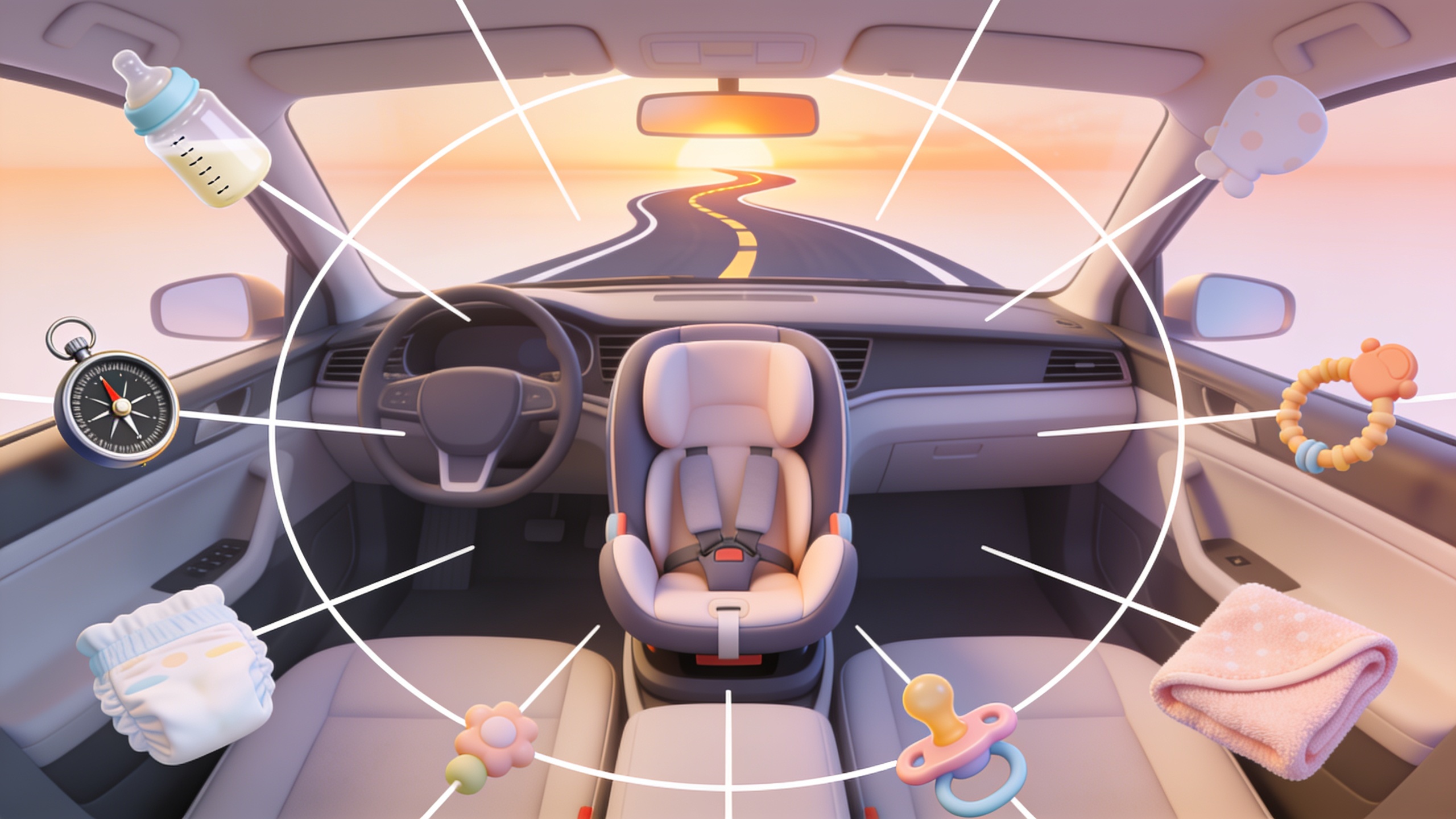
A few things I consider non-negotiable for the car itself:
- A rear-facing mirror so you can see your baby without twisting around while driving
- A sunshade for the window, since infants can’t tell you when the sun is in their eyes
- An extra full outfit change within arm’s reach, not buried in a suitcase
- A dedicated “car bag” separate from your main diaper bag, stocked with diapers, wipes, and a changing pad
- A small cooler for bottles or breast milk, with reusable ice packs
Resist the urge to bring every toy your baby owns. Two or three rotating items, plus something new they haven’t seen yet, does more for entertainment than a backseat full of stuffed animals.
Feeding on the Road
Feeding logistics depend heavily on whether you’re breastfeeding, bottle-feeding, or starting solids, but the core challenge is the same: babies eat on their own schedule, and that schedule doesn’t care about your GPS.
If you’re bottle-feeding, pre-measure formula into individual dispenser containers before you leave so you’re not scooping powder at a gas station with one hand. Bring more bottles than you think you need. I’ve never regretted an extra bottle, but I’ve absolutely regretted running short.
Breastfeeding parents often find rest stops with covered picnic areas or the back seat itself works better than trying to nurse in a moving vehicle, which isn’t safe anyway since baby needs to stay in the car seat while driving. Plan your stops around feeding windows rather than treating feeding as an inconvenience that interrupts the drive.
If your baby has started solids, pouches and pre-portioned snacks in silicone containers travel far better than jars or anything requiring a spoon and a steady hand. Keep a bib and a pack of wipes in the front seat for the inevitable mess.
Managing Sleep in the Car
A moving car often knocks babies out fast, which works in your favor for driving time but can wreck nighttime sleep if naps run too long or too late. Try to keep car naps roughly in line with your baby’s normal nap length, and wake them gently if a nap threatens to bleed into what should be awake time.
White noise helps enormously here. A small battery-powered white noise machine or a phone app playing through a speaker can mask road noise and traffic sounds that might otherwise startle a light sleeper awake every time a truck passes.
For overnight stays, bring a portable travel crib or bassinet rather than assuming a hotel crib will be clean or safe. I’ve seen hotel cribs with broken latches and missing mattress pads more than once, and it’s not worth the gamble with an infant.
Handling the Meltdown Miles
Every road trip with a baby hits a stretch where nothing works. The pacifier falls, the toy gets thrown, the sun hits their face just right, and suddenly you’ve got a screaming baby and forty more minutes to the next exit.
Have a designated “emergency entertainment” item you save specifically for these moments, something the baby hasn’t seen all trip. A car mirror where they can see themselves, a new song, or a parent reaching back to hold a tiny foot can buy you crucial minutes. Sometimes the answer is simply pulling over. Five minutes out of the car resets everyone’s nervous system, including yours.
Key Takeaways
Road tripping with a baby under one comes down to slowing down, packing smart instead of packing heavy, and building your schedule around the baby’s needs rather than forcing the baby into your old travel habits. Expect delays, keep feeding and sleep as consistent as possible, and don’t be afraid to pull over when things fall apart.
The trip will look nothing like your pre-baby road trips, and that’s fine. Lower your mileage expectations, raise your patience, and you’ll get where you’re going with a happier baby and a saner version of yourself behind the wheel.