10 Sanity-Saving Tips On Taking Road Trip With 6 Month Old Baby
The first time I loaded my daughter into her car seat for a six-hour drive, I packed like we were relocating to another continent. Three bags of gear, a stroller I never used, and enough snacks for a toddler twice her age. She was six months old, still nursing on demand, and I had no idea what I was doing.
That trip taught me more than any parenting book. Six months is actually a decent age for road travel. Babies at this stage can sit up, they’re often past the newborn cluster-feeding phase, and they haven’t yet developed the “I refuse to be strapped into anything” opinions that show up around age two. Still, a long drive with an infant requires real strategy. Here’s what actually worked for me and the other parents I’ve talked to since.
1. Time Your Drive Around Nap Schedules
A six-month-old typically naps two to three times a day, and that rhythm is your best friend on the road. I always aimed to start driving right as my daughter’s first nap window opened.
Look at your baby’s natural sleep pattern over the past week and build your departure time around it instead of fighting it. If your baby reliably conks out by 9am, hit the road at 8:45am. You’ll get a solid stretch of quiet driving before anyone needs anything.
2. Break the Drive Into Real Chunks
Pediatricians generally recommend stopping every two to three hours with an infant, and I’d say that’s the outer limit, not a suggestion to push past. Babies need diaper changes, a chance to stretch their legs, and sometimes just a break from the vibration and noise of the car.
I planned stops at rest areas with grass or shade, not just gas stations with a strip of asphalt. A five-minute walk with the baby on my hip did more to reset her mood than any toy in the diaper bag.
Sample stop schedule for an 8-hour drive:
| Hour | Activity |
|---|---|
| 0:00 | Depart during nap window |
| 2:00 | Stop for diaper change, feeding, stretch |
| 4:00 | Longer stop, lunch for parents, tummy time on a blanket |
| 6:00 | Quick diaper and snack stop |
| 8:00 | Arrive, first order of business is a bath and normal bedtime |
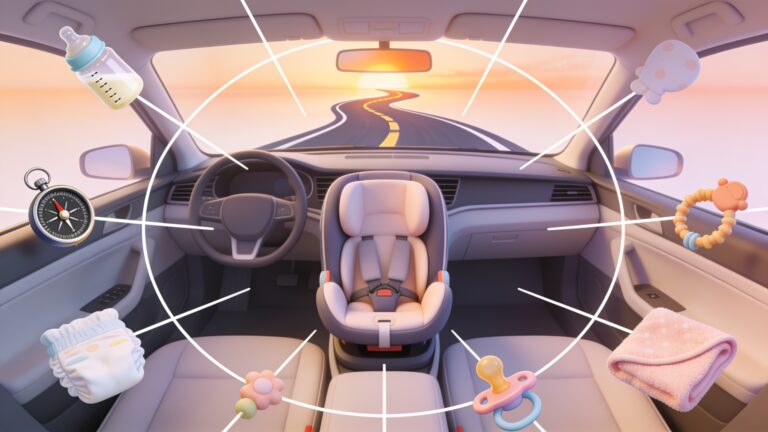
3. Pack the Diaper Bag Like a Mission Kit
I used to overpack. Then I learned that a lean, well-organized bag beats a stuffed one every time, because you can actually find what you need with one hand while the other holds a squirming baby.
Here’s what earned a permanent spot in my bag after that first trip:
- Twice as many diapers as you think you’ll need, road trips always run long
- A full change of clothes for the baby, sealed in a gallon bag in case of blowouts
- Travel-size diaper cream and a pack of wipes kept in the front seat, not the trunk
- A couple of small, quiet toys that won’t end up on the floor every ninety seconds
- A muslin cloth or two for spit-up, sun glare, or an impromptu changing pad
4. Master the Art of the Feeding Stop
Feeding a six-month-old on the road looks different depending on whether you’re breastfeeding, bottle-feeding, or starting solids. I nursed, so I timed my stops around her hunger cues and found a quiet corner of the back seat or a shaded spot outside the car.
If you’re using bottles, pre-measure formula or pump milk into individual containers before you leave so you’re not mixing anything mid-trip. For babies who’ve started solids, pouches are a lifesaver. They require no spoon, no bowl, and no cleanup beyond a wipe.
5. Protect Naps in the Car Seat
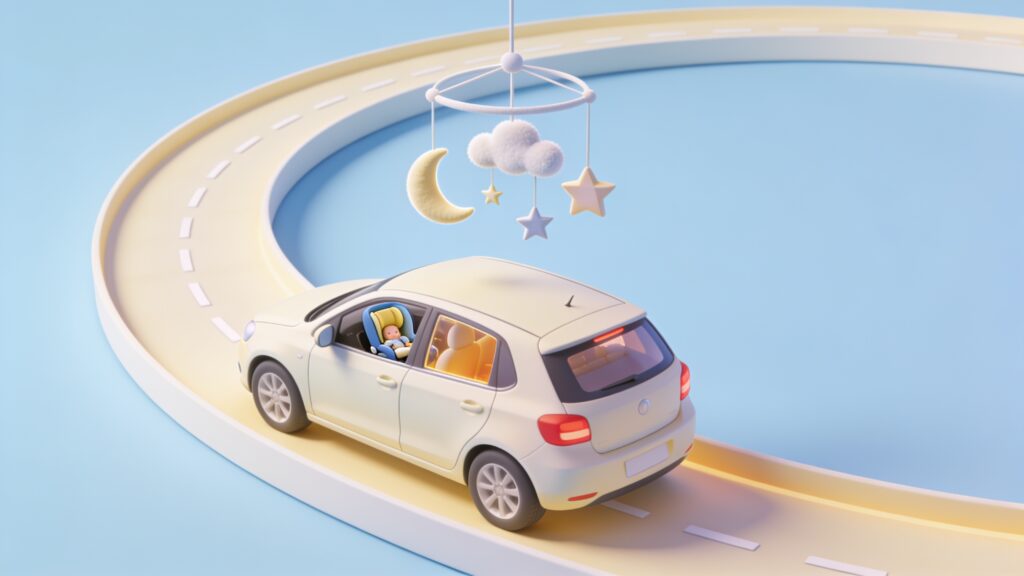
Car seat naps are lighter and more fragile than crib naps, and a sudden stop or a loud radio can wreck one instantly. I kept the volume low, avoided hard braking whenever I could anticipate traffic, and used a sunshade to keep light consistent.
Temperature matters more than people realize. A car that’s slightly too warm will wake a sleeping baby faster than almost anything else, so I ran the AC a touch cooler than felt comfortable for me.
6. Build a Rotating Entertainment System
Boredom hits babies fast, especially once they’re alert and sitting up. I found that rotating toys every 20 to 30 minutes kept my daughter interested far longer than handing her everything at once.
A small mirror clipped to the headrest was the surprise hit of every trip I took. She’d stare at her own reflection for a solid ten minutes, which felt like a small miracle from the front seat.
7. Plan for Overnight Stops If the Drive Is Long
Anything past six or seven hours in a single day is asking for trouble with an infant this age. I split longer trips across two days and booked hotels with a bit of extra floor space for a portable crib or pack-and-play.
Bringing her own sheet from home helped her settle faster in an unfamiliar room. Familiar smells do a lot of heavy lifting for babies who can’t tell you what’s bothering them.
8. Keep a Backup Plan for Meltdowns
Even with perfect timing, a six-month-old will sometimes just lose it in the car. I stopped treating this as a failure of planning and started treating it as a normal part of road travel with an infant.
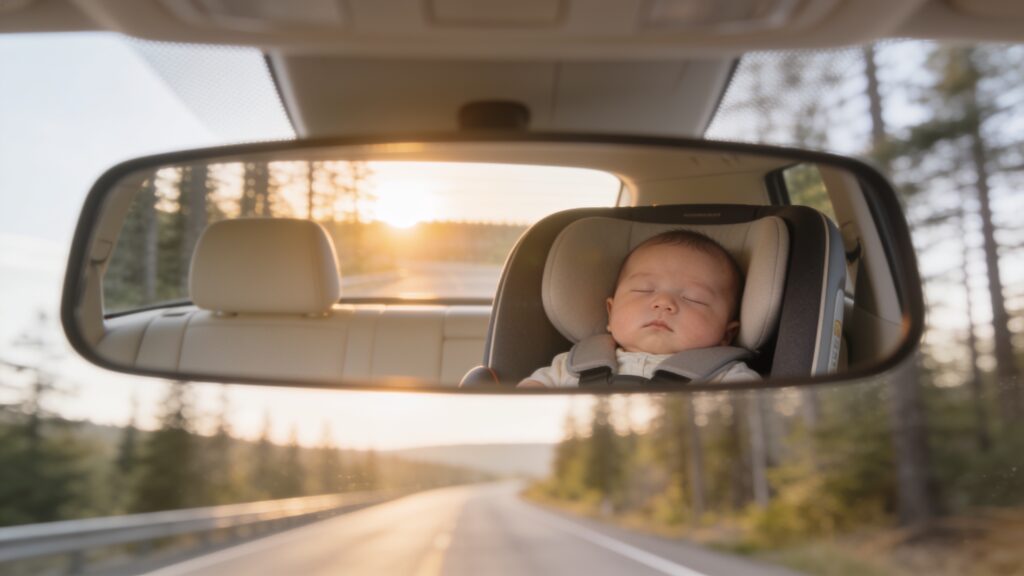
When it happened, I pulled off at the next safe spot rather than pushing through. Sometimes all she needed was five minutes out of the seat, a change of scenery, or just my face close to hers instead of a reflection in the rearview mirror.
9. Involve a Second Adult When You Can
Road trips with a baby go from stressful to manageable with a second set of hands. If you’re traveling with a partner or friend, split the roles clearly, one drives while the other manages feeding, entertainment, and diaper duty.
Solo road trips with an infant are doable, I’ve done several, but they demand tighter planning and more frequent stops. Don’t be afraid to build in extra time if you’re on your own.
10. Lower Your Expectations for the Drive Itself
The biggest shift in my thinking came when I stopped expecting the drive to go smoothly and started expecting it to go acceptably. That mental adjustment saved my sanity more than any gadget or app.
Some hours will be calm. Others will involve a crying baby, a blown-out diaper on the highway shoulder, and a lukewarm coffee you never get to finish. Both are normal parts of the same trip.
Final Thoughts
Road tripping with a six-month-old takes more planning than a solo drive, but it’s far from the ordeal people warn you about. Time your departure around naps, break the drive into real chunks, pack smart instead of heavy, and give yourself permission to stop whenever your baby needs it.
The next time you’re staring down a long drive with a car seat in the back, remember that thousands of parents have made this same trip and lived to tell about it, coffee stains and all. Pack the essentials, build in buffer time, and go make the memories. Your baby won’t remember the drive, but you’ll remember that you handled it.